

Loving What You Remember
Personal Essay

New Year’s Day is a time when many people become memoirists, thinking back on a year that had just passed by sifting through the most important highlights. Every year, I’m always curious about which memories will float to the top, and why. But my instinct is to refuse what feels easy. I want to remember the correct things, the most obviously significant ones. I want to perfect reflection.
For example, when thinking about big changes in 2024, joining a spinning club came to mind first. But plenty of more obviously significant things happened: I adopted a dog, Willow, a few months ago; I started a newsletter; Donald Trump was catastrophically elected for a second term.

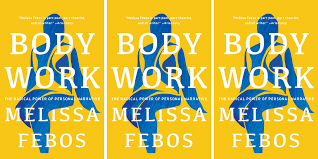
In the grand scheme of things, joining a spin club seems pretty minor. But it’s what’s on the top of my mind today, and so it’s what I’m going to write about. Body Work, Melissa Febos’s perfect book about the essential value of personal narrative writing, seems to validate this approach:
I suspect that everything we remember has symbolic meaning, is delivered to us as a suggestion, a lesson, a reminder, or else perhaps a haunting, a ghost consigned to the human realm until it completes some bit of unfinished business. (116-7)
Memories are symbols. Each and every memory that I have symbolizes something important to me that I need to return to for some reason. The memories at the top of my mind are just as much memories as the ones I mine for. In fact, their begging to be remembered might just indicate how truly potent they are.
Let’s test this. Of all possible 2024 memories, why am I thinking of spinning on a stationary bike on New Year’s Eve? Let’s ignore that I’m preparing to leave for a New Year’s Eve glow ride in about an hour. What could spinning possibly symbolize? How is my year like a spin class? What’s the spin on my year? How did my year spin?
A stationary bike allows for progress without moving through space.
I just finished a novel called Orbital by Samantha Harvey, which is about six astronauts on an international space station wondering at the beauty and terror of hovering 250 miles above the earth, flying at 17,500 miles per hour. Mostly plotless, the elusive narrator seems to bounce around inside of the space station, visiting each character’s consciousness like Patrick Swayze in Ghost temporary inhabiting Oda Mae Brown’s mind. Or, like a Virginia Woolf novel: Mrs. Dalloway’s party in space. The novel even uses some Woolfian beats: a death to confront, discussions of art, disorienting transitions. The nearest the novel gets to a plot is an occasional reference to a parallel event: a lunar mission helmed by four nameless astronauts.
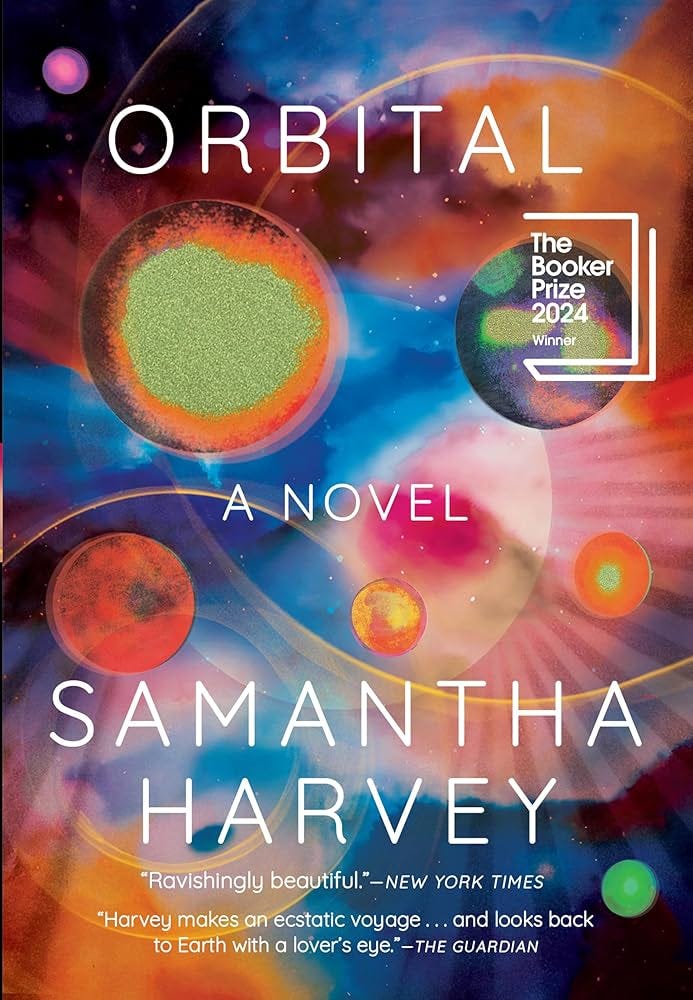
The six space station astronauts seem to be varyingly excited about and haunted by the lunar mission. There’s even a note of jealousy in some of the astronauts’ reflections:
All your dreams of adventure and freedom and discovery culminate in the aspiration to become an astronaut, and then you get up here and you are trapped, and spend your days packing and unpacking things, and fiddle in a laboratory with pea shoots and cotton roots, and go nowhere by round and round with the same old thoughts going round and round with you.
This isn’t a complaint. God, no, this isn’t a complaint. (26-7)
I think this way sometimes in spin class. Like…really, can’t I have just gone on a bike ride? What’s the point of being trapped here, stationary? But, if an astronaut (who is one of about six-hundred people to have visited space out of the 117 billion humans who have ever lived on earth) can beat themselves up for living a tedious life, maybe I can think outside of my own self-judgement for a minute.
Throughout most of my life, I’ve been horrified of physical challenges. I hated gym class with a deep, fiery passion. I calculated how many classes I could skip while passing with the minimum grade of a D. I took up running in college, but that felt safe because I was alone and no one would notice me; and if they did, I would be gone in a moment. But in spin class, I’ve found a way to exercise that is fun and challenging and, most importantly, community-based. I get shout-outs from the instructors. They know my name. I’ve met new friends. They notice me. In that way, the stationaryness of spin class feels, ironically, like I’m flying into new spaces. Sure, it’s not an astronomic feat, but isn’t it funny that even astronauts don’t always feel like they’ve accomplished much?
There are other symbolic resonances of spin class. While it came to mind before Willow, my attendance at the class is closely related to her. I froze my membership after getting the dog because she needed constant attention for the first few weeks and I couldn’t get away, even for an hour. I worried that Willow was heralding the end of my new, beloved exercise routine. But when my membership unfroze, I resumed attendance without a hiccup. So, spin class also symbolizes that I’ve accomplished a tenacious holding-together of complicated things.
I hope this post isn’t reading as an ad for spin class. My main intention is to offer a method of reflection.
Maybe you don’t need to think any harder about your year than you want to. Or maybe you should, but maybe your hard-thinking doesn’t have to be about anything too emotionally taxing or climactic. I think if you’re remembering something about your year, right now, you should just explore its significance. Maybe write 200 words about it. After all, just because a memory is easy to think about doesn’t mean it’ll be easy to write about; and just because a memory is here now doesn’t mean you’ll remember it tomorrow.
Memories that are asking for your attention are there to serve you. And you can love them back.
My good friend is obsessed with spin. Love your take here and how you connected it to orbital - that’s been on my TBR list since last year!
Thanks for making me think, again, about April's total eclipse--witnessing it with my grandkids, I wondered how they'd remember it.